Let me start by saying that there many families that live a totally organic, eco-friendly lifestyle. Unfortunately, mine is not one of them. "Simple Living" just does not fit our buys, hectic lifestyle. Convenience and time saving are critical. However, there are simple things any family, and I mean any family can do to live a greener, more earth-friendly lifestyle. Believe me if my family can do little things to help the environment, yours can too.
Here are some tips, you and your family can do with little to no extra effort:
- Buy Organic Foods. Many grocery stores are providing organic options, especially when it comes to dairy, produce, and meat.
- Recycle and Reuse. Recycle bottles, plastics, cardboard and paper. Reuse items whenever possible, like using grocery bags for trash.
- Receive and Pay Bills Online. Just think of all those paper inserts in those bill envelopes. Save paper checks for those that receive electronic checks or debits. Make sure to recycle the paper for those that you did get in the mail.
- Use Organic Cleaning Supplies . Protect your family from harsh chemicals while protecting the water supply.
- Use Towels/Rags. Instead of paper towels, use towels and rags for cleaning up messes. This was very hard for us but we are working on it.
- Get a Water Filter. Although they are coming out with more eco-friendly water bottles, it's still best to use a reusable cup and fill it directly from the tap.
- Use Organic or Chemical Free Personal Care Items. Not only are they better for the environment, they are safer for your family.
- Turn Off the Lights and Unplug Unused Electronics. You'd be surprised how much you can save by turning off unused lights and unplugging items/turning off electronic items when not in use like DVD players or PC or printers, or cellphone chargers.
- Turn Off the Water While Brushing Your Teeth. Think of how much water goes down the drain while you brush your teeth for two minutes and you don't need it.
- File Your Taxes Online. This is late for this year but think about it for your 2011 taxes. With all the forms and schedules involved in do your taxes these days (mine would have been 24 pages), filing online is seriously saving some trees, especially if everyone is doing.


 Peggy O'Mara, publisher, editor and owner of
  By Sharon Silver
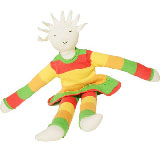 With the frenzy of toy recalls in 2007, parents have started asking questions. Are any of their children’s toys safe? What about their kid’s bedding? Their clothes? Sure, lead-laden toys should obviously be out of a child’s reach, but it’s time to look more closely at all the things our children eat, touch, feel and wear in their everyday lives. Even ‘conventional’ cotton, once considered the natural fiber of choice, is no longer safe for our children. Organic cotton, on the other hand, is healthy for all our planet’s creatures, from children and wildlife to farm and factory workers.
 Before the 1950s, cotton-growing mainly involved sustainable techniques, but now cotton is one of the most environmentally damaging crops grown in the world, resulting in wide-scale water pollution, chronic illness in farm workers, and calamitous effects on wildlife. Conventionally grown cotton occupies only three percent of the world’s farmland, but uses 25 percent of the world’s chemical insecticides, including Parathion, which is at least 30 times more toxic that DDT! As insects develop pesticide resistance over time, farmers desperate to keep up yields often resort to genetically modified cottonseed and heavier and heavier cocktails of pesticide poisons. Ironically, less than ten percent of those chemicals actually accomplish their task—the rest are absorbed into the plants, the soil, the air, the water and eventually, our bodies.